
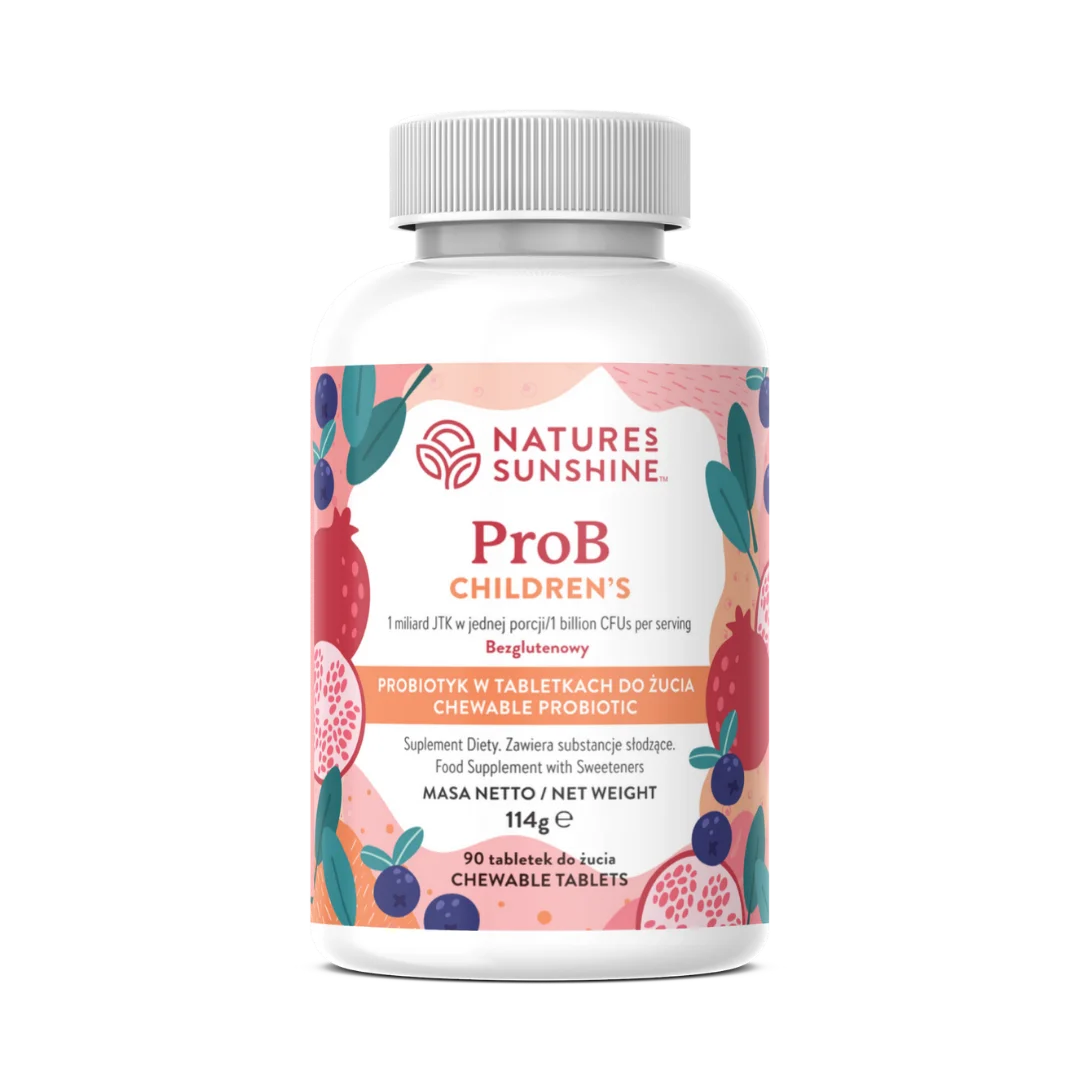
ProB Children’s (90 tabs) Nature’s Sunshine Products NSP
Price without registration: 139.00 zł with VAT

Every day in a child’s life brings many new challenges! Therefore, it is worth supporting the daily diet in a way that is simple, pleasant and accepted by the youngest. That is why ProB Children’s – dietary supplement for children in the form of delicious chewable tablets, created with children in mind, who willingly reach for it because it resembles a treat, and parents appreciate it for its carefully developed ingredient list.
Nature's Sunshine Products
- Registration and purchases take place on the home page of Nature's Sunshine Products
REGISTER AND BUY 30% OFF::

“
PROB CHILDREN’S – NATURE’S SUNSHINE PRODUCTS
DIETARY SUPPLEMENT FOR CHILDREN – ProB Children’s
A daily portion ofgood bacteria for little explorers!
Every children’s day is a multitude of new challenges! Therefore, it is worthwhile to support the daily diet in a way that is simple, pleasant and accepted by the youngest. That’s why ProB Children’s – dietary supplement for children in the form of delicious tablets for chewing, created with the thought of children, who eagerly reach for it because it resembles a treat, and parents appreciate it for the carefully developed composition with attention to detail.
Co wyróznia ProB Children‘s?
- 1 billion lactic acid bacteria in each tablet – from 11 selected strains.
- Protector Shield Mix – a composition of plant, fruit, and amino acid ingredients
- Convenient form for chewing and friendly taste
- Perfect for daily supplementation of the diet
When is it worth to reach for ProB Children’s?
- when changing diet or daily routine (e.g. start of the school year, trips)
- when a child does not like traditional forms of supplements
- as a tasty part of the daily routine
- when a parent wants to gently introduce live cultures into the diet
ForKnownParents
ProB Children’s to helpchildren in their daily routine, which doesn’t require convincingthe child, and can become a pleasant ritual.
INGREDIENTS PROB CHILDREN’S
sweetening agents: sorbitol, mannitol; Protector Shield® Blend [concentrated fruit juices from: white grapes, apples, pears, oranges, pineapple, cherries, strawberries, and blueberries; cranberry fruit (Vaccinium macrocarpon), mangosteen fruit (Garcinia mangostana), asparagus stems (Asparagus officinalis), broccoli (Brassica oleracea var. italica), carrot root (Daucus carota), spinach leaf and stem (Spinacia oleracea), tomato fruit (Solanum lycopersicum), acai berry concentrate (Euterpe oleracea), L-leucine, pomegranate fruit extract (Punica granatum), L-lysine, L-valine, L-isoleucine, choline bitartrate, inositol, L-phenylalanine, L-threonine, L-arginine, L-methionine, L-tyrosine, L-cysteine], natural flavors, sweetener: xylitol, fructose, anti-caking agent: fatty acids, beetroot juice concentrate, Lactobacillus rhamnosus, Bifidobacterium bifidum, Lactobacillus acidophilus, Lactobacillus bulgaricus, Lactobacillus brevis, Lactobacillus plantarum, Streptococcus thermophilus, Bifidobacterium infantis, Bifidobacterium longum, Lactobacillus casei, Lactobacillus salivarius, anti-caking agent: magnesium salts of fatty acids.
|
Active ingredients: |
In a daily portion(2 tablets) |
|
Blend of live cultures:Bifidobacterium bifidum, infantis, and longum; Lactobacillus rhamnosus, acidophilus, bulgaricus, brevis, plantarum, salivarius, and casei; Streptococcus thermophilus Bifidobacterium bifidum, infantis i longum; Lactobacillus rhamnosus, acidophilus, bulgaricus, brevis, plantarum, salivarius i casei; Streptococcus thermophilus |
1 Billion JTK* |
|
PROTECTOR SHIELD® Blend |
100 mg
|
|
Complex of food ingredients: mangosteen fruit, cranberry fruit, broccoli flower, spinach leaf and stem, asparagus stalks, carrot root, tomato fruit, acai berries, pomegranate fruit extract |
|
|
Fruit juice concentrates: white grapes, apples, pears, oranges, pineapples, cherries, strawberries, and blueberries |
|
|
Trace elements:L-leucine, L-lysine, L-vanilla, choline bitartrate, inositol, L-isoleucine, L-threonine, L-phenylalanine, L-arginine, L-cysteine, L-methionine, L-tyrosine |
|
|
JTK*: unit forming a colony |
RECOMMENDED DOSE TO CONSUME DURING THE DAY:
Take 1 tablet twice a day. Do not exceed the recommended dose for daily consumption!
Storage conditions:Store in the refrigerator or freezer. Keep out of reach of small children.
This product is intended for children who can eat independently.
Nature’s Sunshine encourages a healthy lifestyle. Dietary supplements for children cannot be used as a substitute for a varied diet. A balanced diet and a healthy lifestyle are essential for the proper functioning of the body.
Dietary Supplement for Children: Key to Health and Development
Dietary supplements for children are a group of products designed to complement a normal diet when, for various reasons, conventional nutrition may not provide all the necessary nutrients. The term “dietary supplement” indicates a supplementary, not a substitute, nature of these preparations. Their role in children’s nutrition is the subject of research and discussion, especially in the context of proper physical and cognitive development, as well as support for the immune system. This article aims to provide an overview of dietary supplements available for children, discussing their potential benefits, key ingredients, and indications for use, based on available data and selected literature.
Vitamin D3: Foundation of Growth and Immunity
Vitamin D3, also known as cholecalciferol, is a key nutrient in a child’s diet, serving functions that go beyond classic associations with bone health. Its deficiency during growth can lead to serious health consequences.
Role of Vitamin D3 in a Child’s Body
Vitamin D3 is essential for the proper absorption of calcium and phosphorus from the gastrointestinal tract, which directly translates into the mineralization of bones and teeth. Bone growth in children is a dynamic process, and an adequate level of vitamin D3 is fundamental in this context. The metaphor of a \”foundation\” is appropriate here – without a solid foundation, represented by D3, building a strong skeleton is difficult. Moreover, studies indicate the significant role of vitamin D3 in the functioning of the immune system, modulating its response to infections. It may influence the reduction of the risk of respiratory infections.
Indications for vitamin D3 supplementation
Due to limited exposure to sunlight in many geographical locations, as well as air pollution and the use of UV filters, the skin synthesis of vitamin D3 is often insufficient. For this reason, vitamin D3 supplementation is commonly recommended for infants and children in Poland, regardless of feeding method. Preventive doses are usually recommended, tailored to the child’s age. Examples of products available on the market include Naturell Vitamin D (valid until 03.2026) and MyKids Vitamin D3. Starting from 2026, Slavito HelioVit Kids will also offer a vitamin complex supporting development, including vitamin D3. Appropriate dosing should always be consulted with a pediatrician.
Multivitamins: supplementing dietary deficiencies
Multivitamins for children are preparations containing a complex of vitamins and often minerals, aimed at supplementing any deficiencies in the diet. They are particularly considered when a child’s diet is unbalanced or restricted.
When can multivitamins be helpful?
One of the main target groups for multivitamin supplementation are \”picky eaters.\” Children who exhibit selective eating habits, refusing to consume certain groups of products, may be at risk of vitamin and mineral deficiencies. Multivitamins can then act as a \”safety net\” minimizing the risk of serious deficiencies. Examples of products available on the market include MyVita Multivitamin Liquid (for ages 4 and up, with a mango flavor), Visolvit Junior (available in sachets), Nordic Naturals Nordic Berries (in gummy form), and Lilu Kids Multivitamin. Among the recommended multivitamins for 2025 are Hilki Multi ForMeds (powder for ages 3 and up) and Vibovit Bobas (in sachets). It should be remembered that supplements will not replace a balanced diet.
Specific Ingredients in Multivitamins and Their Role
Typical multivitamins contain B vitamins, essential for the proper functioning of the nervous system and metabolic processes. Vitamin C supports immunity and acts as an antioxidant. Vitamin A is important for vision and skin health. Minerals such as zinc, which supports immunity, and iron, which prevents anemia, are also frequently added. An example of a comprehensive product for immunity is Na-Co-Dzień Multivitamin. In the composition of some multivitamins, we can also find bioflavonoids or extracts from superfoods, such as acerola, rich in vitamin C, or spirulina, which is a source of protein and B vitamins.
Probiotics: Gut Microbiota Balance
Gut microbiota plays a central role in a child’s health, influencing not only digestion but also the development of the immune system and even cognitive functions. Probiotics are live microorganisms that, when administered in adequate amounts, provide health benefits to the host.
The Importance of a Healthy Gut Microbiota
The intestines are often referred to as the ‘second brain’ or the ‘resilience command center.’ In children, the development of gut microbiota begins during the prenatal period and continues for the first years of life. A healthy and diverse microbiota is crucial for proper digestion, nutrient absorption, and the synthesis of certain vitamins. Additionally, it plays a significant role in the maturation of the immune system and protection against pathogens. Imbalances in the microbiota, known as dysbiosis, can lead to digestive issues, allergies, and even affect mood and behavior.
When to supplement with probiotics?Probiotic supplementation may be considered in several situations. They are recommended during and after antibiotic therapy to minimize the negative impact of antibiotics on the gut flora. They can also aid in cases of diarrhea (both infectious and antibiotic-associated) and in alleviating symptoms of certain digestive disorders. For ‘picky eaters’, probiotics can improve digestion and absorption, which indirectly influences appetite. There are probiotics available on the market dedicated to children, such as MyVita Probiotic Kids. It is also worth mentioning BioGaia ProTectis, available on promotion, which is often recommended. Lactoferrin, such as MyVita Lactoferrin Kids, is also an ingredient that supports immunity and gut function.
Omega-3 Fatty Acids: support for the brain and visionOmega-3 fatty acids, especially DHA (docosahexaenoic acid) and EPA (eicosapentaenoic acid), are essential for the proper development and functioning of the brain, nervous system, and vision in children. The human body cannot synthesize them adequately, so they must be supplied through diet or supplementation.
The role of Omega-3 in cognitive developmentDHA is a key building block of the brain’s cortex and the retina of the eye. During periods of intense brain growth and development, from fetal life to early childhood, an adequate supply of DHA is crucial for shaping cognitive abilities such as memory, concentration, and learning skills. The metaphor of \”bricks\” is fitting here – DHA is the fundamental brick from which an efficient brain is built. Research suggests that omega-3 supplementation may positively influence cognitive and behavioral functions in children, including reducing symptoms of ADHD.
Omega-3 Supplement Products and Indications
The role of Omega-3 in cognitive developmentDHA is a key building block of the brain’s cortex and the retina of the eye. During periods of intense brain growth and development, from fetal life to early childhood, an adequate supply of DHA is crucial for shaping cognitive abilities such as memory, concentration, and learning skills. The metaphor of \”bricks\” is fitting here – DHA is the fundamental brick from which an efficient brain is built. Research suggests that omega-3 supplementation may positively influence cognitive and behavioral functions in children, including reducing symptoms of ADHD.
Omega-3 Supplement Products and Indications
Fatty marine fish (salmon, mackerel, sardines) are a source of omega-3 in the diet. However, these products are often lacking in children’s diets, and the reluctance to consume fish is common. In such cases, omega-3 supplementation becomes essential. Health Labs Care MyKids Brain is an example of a supplement containing omega-3 fatty acids, dedicated to supporting brain function in children. Revitanerw Junior, containing omega and vitamin B6 (with an expiry date of 02.2026), is another product supporting the nervous system. When choosing a supplement, attention should be paid to the dosage of DHA and EPA, as well as the form of administration (e.g., drops, chewable capsules), so that it is acceptable for the child.
Other Key Supplements and Aspects of Children’s Health
In addition to vitamin D3, multivitamins, probiotics, and omega-3, there are other supplements that may be considered depending on the individual needs of the child. Supporting the immune system and bones are areas where supplements play an important role.
Supplements Supporting Immunity
The child’s immune system is in a developmental phase and often encounters pathogens. In addition to a balanced diet and an appropriate amount of sleep, some supplements can support its functioning. As mentioned, vitamin C, beta-glucans, colostrum, and zinc are components commonly used in immunity-supporting preparations. Zinc, available for example in the Naturell Zinc + C set, plays an important role in cellular communication and the functioning of many enzymes, and its deficiency can weaken immunity. Lactoferrin, found in MyVita Lactoferrin Kids, is also a protein with immunomodulatory properties, supporting the body’s natural defense mechanisms.
Bone Strengthening: Calcium and D3
Proper bone development in children is not just a matter of vitamin D3. Calcium is the main mineral component of bones, and its adequate supply is essential for achieving peak bone mass. Supplements like Mighty Bones combine calcium with vitamin D3, creating a synergistic effect – D3 improves calcium absorption, and calcium is a building block for bones. This is especially important during periods of rapid growth. Regular consumption of dairy products and leafy green vegetables is fundamental, but in cases of deficiencies or specific needs, supplementation may be considered.
Availability and Promotions
A variety of products are available on the market, and their availability may change. For example, Naturell offers vitamin D and C sets. Products like BioGaia ProTectis or Naturell Zinc + C may be available as part of promotions, e.g., on e-commerce platforms. The expiration date of products such as Naturell Vitamin D (03.2026) or Revitanerw Junior (02.2026) is an important aspect to check before purchase. When choosing a supplement, it’s worth paying attention to its composition, form of administration, recommended dosage, and ensuring that it is intended for the specific age group of the child.
Summary and Recommendations
Dietary supplements for children are not medications and do not replace a balanced and nutritious diet. Their role is to supplement potential deficiencies or support specific functions of the body when the diet is insufficient or when there is an increased demand. Vitamin D3 is universally recommended as a supplement for most children. Multivitamins, probiotics, and omega-3 fatty acids are considered on an individual basis, depending on the child’s lifestyle, diet, and specific needs.An individual approach and consultation with a pediatrician or dietitian before starting supplementation are crucial. A specialist can assess whether a particular supplement is necessary, at what dosage, and for how long. Self-administering supplements without control can be ineffective and, in some cases, even harmful. The products mentioned in the article, such as Slavito HelioVit Kids, Multiwitaminy Kids 150g, MyVita Laktoferyna Kids, Health Labs Care MyKids Brain, and MyVita Probiotic Kids, are examples of preparations that are being indicated as supportive of children’s development and immunity in 2026. The dietary supplement market is dynamic, which is why it is important to monitor current recommendations and available products.
FAQ
1. What is a dietary supplement for children?
A dietary supplement for children is a product containing vitamins, minerals, or other nutrients aimed at supplementing a child’s daily diet and supporting their proper development.
2. When is it advisable to give dietary supplements to children?
Dietary supplements may be indicated when a child has nutrient deficiencies, is on an elimination diet, has increased requirements for vitamins or minerals, or when a doctor recommends their use.
3. Are dietary supplements for children safe?
Dietary supplements intended for children are usually safe when used according to the manufacturer’s and doctor’s recommendations. It is important not to exceed the recommended dosage.
4. What ingredients are most commonly found in supplements for children?
The most commonly encountered ingredients are vitamins (e.g., D, C, B6), minerals (e.g., calcium, iron, zinc), omega-3 fatty acids, and probiotics that support immunity and development.
5. Can dietary supplements replace a healthy diet for children?
No, dietary supplements should not replace a balanced and varied diet. They are merely a supplement that helps cover potential deficiencies in nutrients.”
Related products
-

Power Greens (450 g) Nature’s Sunshine NSP
Price without registration: 273.00 zł with VAT -

Carbo Grabbers (60 caps.) Nature’s Sunshine NSP
Price without registration: 155.00 zł with VAT -

Perfect Eyes (60 caps.) Nature’s Sunshine Products NSP
Price without registration: 186.00 zł with VAT