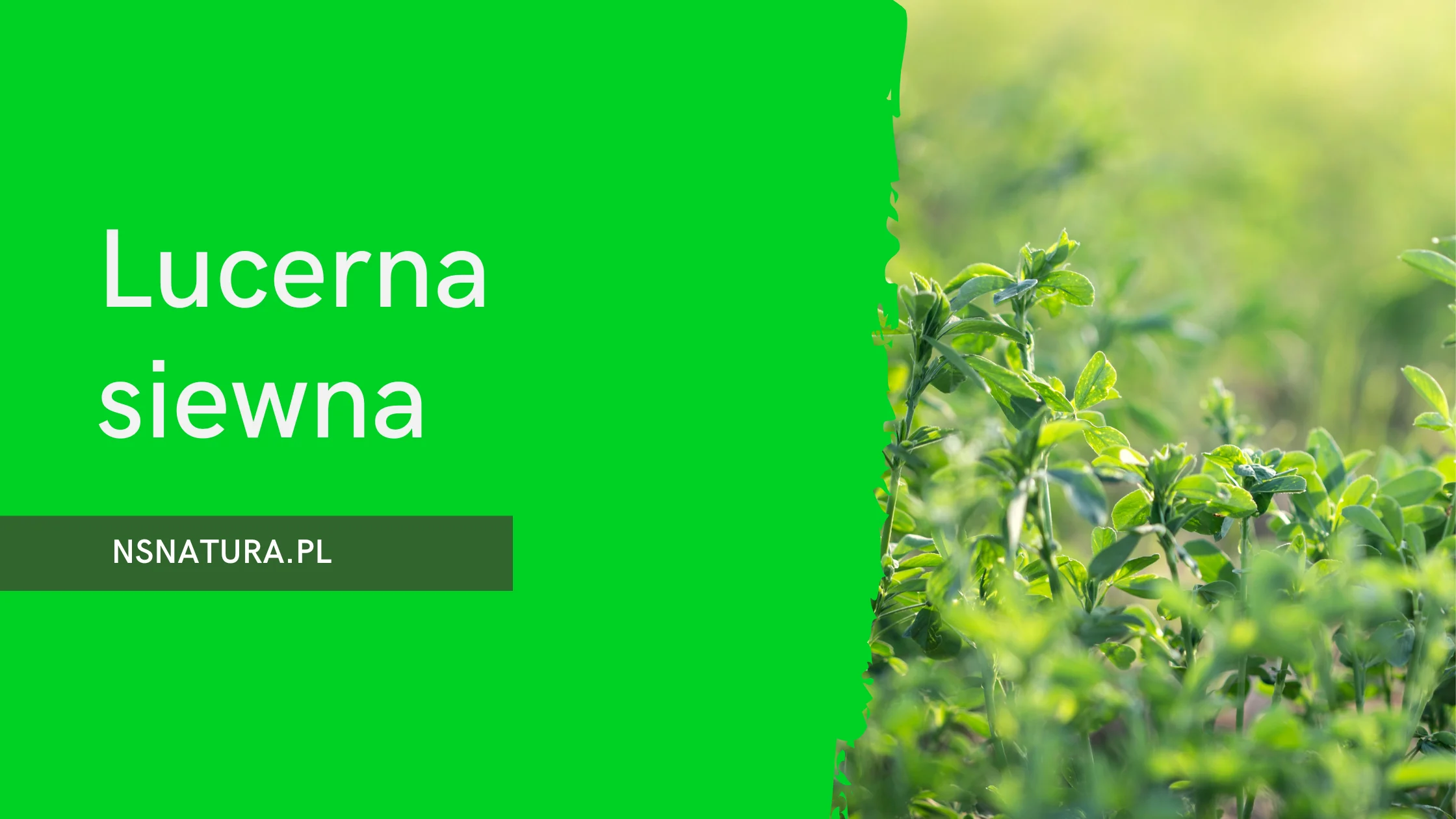
Alfalfa (Medicago sativa L.), also known as alfalfa, is a perennial plant from the legume family (Fabaceae). Although in Poland it is often associated mainly as animal fodder, its leaves, sprouts, and dried parts have significant health benefits and are used in natural medicine, dietetics, and supplementation. Alfalfa is a light-loving plant, easily adapting to various soils, and its green parts are rich in vitamins, minerals, and bioactive substances.
Distribution and Cultivation
Alfalfa originates from Central Asia but is now grown in Europe, North America, and Poland. It prefers well-drained soils rich in nutrients, and sunny positions. In the wild, it rarely grows spontaneously; it is most commonly found in cultivated fields, pasture meadows, and gardens. In Poland, it is primarily grown for green fodder for animals, but thanks to the growing popularity of healthy food, it increasingly appears in health food stores and dietary supplements.
Chemical Composition and Nutritional Values
Alfalfa is a true “superfood” – rich in nutritional and bioactive ingredients:
- Plant Protein – contains all essential amino acids, supporting regeneration and metabolism.
- Vitamins – A, C, K, and B group vitamins.
- Minerals – calcium, magnesium, potassium, iron, manganese, and zinc.
- Flavonoids, saponins and phytosterols – act as antioxidants, support the circulatory system, and have anti-inflammatory properties.
- Chlorophyll – a green plant pigment that aids in detoxifying the body, cleansing the blood and intestines, neutralizing free radicals, and supporting skin and immune system health.
- Dietary fiber – improves intestinal peristalsis, helps regulate sugar levels, and maintains proper weight.
Chlorophyll is one of the main components responsible for the cleansing and detoxifying action of alfalfa, making it an exceptionally valuable plant for spring detoxification of the body.
Alfalfa in Nature’s Sunshine Supplements
- We have a standalone supplement “Alfalfa” (capsules) containing alfalfa (Medicago sativa) as an ingredient. Alfalfa is described as an herb used for over 2000 years and recommended for, among other things, supporting women’s sexual health.
- Alfalfa is also used in our Liquid Chlorophyll – the product is made from mulberry leaves and alfalfa.
- Alfalfa is also found in blends/comprehensive products and multi-component preparations (e.g. Cynk ALT contains, among others, alfalfa) and is listed in the product catalog as an available supplement (e.g. Alfalfa 100 caps.)
Health Benefits of Alfalfa
1. Digestive System Support and Detoxification
Alfalfa has an alkaline effect, aids digestion, and neutralizes excess acids in the body. Chlorophyll in the leaves supports natural cleansing processes of the blood and liver.
2. Circulatory System Support
Saponins and phytosterols contribute to lowering LDL cholesterol and triglyceride levels, protecting the heart and blood vessels.
3. Strengthening of the Skeletal and Muscular Systems
Thanks to calcium, magnesium, and vitamin K, alfalfa supports bone and muscle health, which is important for the elderly or convalescents.
4. Anti-inflammatory and Antioxidant Effects
Flavonoids and chlorophyll protect cells, soothe inflammation, and support the body’s immunity.
5. Support for the Hormonal System
Some studies suggest that alfalfa may support hormonal balance and assist liver metabolism, contributing to better well-being and metabolic health.
Forms of Use
- Alfalfa Sprouts – the richest in vitamins, minerals, and chlorophyll; added to salads, sandwiches, and smoothies.
- Dried or Powdered Leaves – used in teas, infusions, capsules, or powders.
- Alfalfa Juice – fresh juice acts as an energizer and cleanser.
- Alfalfa Leaf Tea – supports digestion, cleansing, and strengthens the body.
Example of Alfalfa Infusion:
- 1 teaspoon of dried leaves
- 250 ml of boiling water
- Brew for 10 minutes, drink 1–2 times a day
Contemporary Use
- Dietary Supplements – capsules, powders, tablets with alfalfa are used for body cleansing and mineral supplementation.
- Sprouts and Health Food – young sprouts in cocktails, salads, and smoothies.
- Natural Medicine – infusions support digestion, energy levels, and metabolism.
- Natural Cosmetics – alfalfa extracts used in creams and masks as a source of chlorophyll and antioxidants.
Contraindications and Notes
Alfalfa is considered a safe herb, however, individuals taking anticoagulants, suffering from autoimmune diseases, or allergies to legume plants should consult its use with a doctor. In rare cases, it may cause allergic reactions.
Summary
Alfalfa is a versatile plant, rich in vitamins, minerals, and chlorophyll, supporting the digestive, circulatory, immune, and hormonal systems. Its modern use in the form of sprouts, infusions, or supplements makes it easily accessible and valued as a part of a healthy diet and health prevention. Chlorophyll in alfalfa leaves plays a key role in its cleansing and antioxidant properties, making it an ideal spring herb and plant-based “superfood”.
FAQ
Alfalfa is deservedly called a superfood – it contains a wide spectrum of vitamins, minerals, amino acids, and chlorophyll. This is not a trend, but a plant with very high nutritional density. Its value results from its composition, not marketing.
The most valuable are fresh sprouts – they contain the most enzymes and active ingredients. Powder and supplements are convenient, while infusions work more gently and supportively. The choice depends on the goal and lifestyle.
Yes, but not in a magical way. Thanks to chlorophyll and fiber, it supports natural detoxification processes – mainly in the intestines and liver. It’s support for processes the body already has, not a replacement.
The first effects – such as improved digestion or a slight boost in energy – can appear after a few days. Deeper changes, for example in metabolism or skin condition, require regular use for several weeks.
Yes – the saponins and phytosterols it contains can support lowering LDL levels and support the circulatory system. It is not a medicine but a valuable support with a proper diet and lifestyle.
It may have an impact – particularly by supporting liver function and hormone metabolism. Some plant compounds may gently modulate hormonal balance, but this does not replace medical therapy.
It is not a weight loss agent in itself, but it supports processes that affect weight – digestion, metabolism, and body balance. It can be part of a larger strategy.
Yes – it is one of the simplest and safest forms. However, it is worth maintaining diversity and not basing the diet on just one ingredient.
Not in every case. People taking anticoagulant medications, those with autoimmune diseases, or a legume allergy should exercise caution. In such situations, it’s worth consulting a specialist.
Yes – it pairs very well, for example, with nettle, chlorella, or spirulina. However, the key is to combine them consciously and observe your body, rather than making random mixtures.
Polish literature
- Różański H., Kowalski K. – Alfalfa in herbal medicine and dietetics, PZWL, Warsaw 2005.
- Koprowska K., Pawlak W. – Medicago sativa – a multipurpose plant, “Panacea” 2010, no. 4, pp. 12–16.
- Nowacki J. – Herbs and their use in natural medicine, Medical Publishing, Warsaw 2012.
- DOZ.pl – Green alfalfa – https://www.doz.pl/ziola/z1746-Lucerna_zielona
- Herbapol – Alfalfa – https://herbapol.com.pl/en/handbook/alfalfa?utm_source=chatgpt.com

Anna Świączkowska - a conscious woman who understands that health is not an accident, but an everyday choice. It focuses on prevention and real action instead of waiting for a problem to arise. A certified phytotherapist - she completed specialized studies and numerous specialized courses, thanks to which she combines academic knowledge with a practical approach to working with the body. Her approach is based on understanding nature and using its potential in a conscious and responsible way. Every day, he takes care of the body's balance through conscious nutrition and supplementing his diet with the highest quality supplements. It chooses solutions that are proven, clean and based on natural composition. Independent distributor of Nature's Sunshine products - a brand trusted not only by her, but also by her loved ones. In her home, supplementation and conscious care are not a trend, but a lifestyle. It works based on experience, observation and consistency - because health is built every day, with small decisions that, over time, create real change.